

Full Video:
Death on Half Dome

You might have heard of the 20-year-old woman, Grace Rolhoff who died recently on Half Dome during her descent of the cable system with her dad. Both were extremely fit and experienced hikers, but Grace slipped on the wet granite after a storm had come in and forced them down. While most people simply expressed sympathy, some blamed them for being up there when there were clouds threatening rain. Others have clamored for the park to install greater safety measures on Half Dome.
Sadly, Grace is not the first person to die on Half Dome. Even limiting the count to those who have died on its infamous “Cable Section” the numbers are in the double digits. So just what are the cables, and are they actually safe?
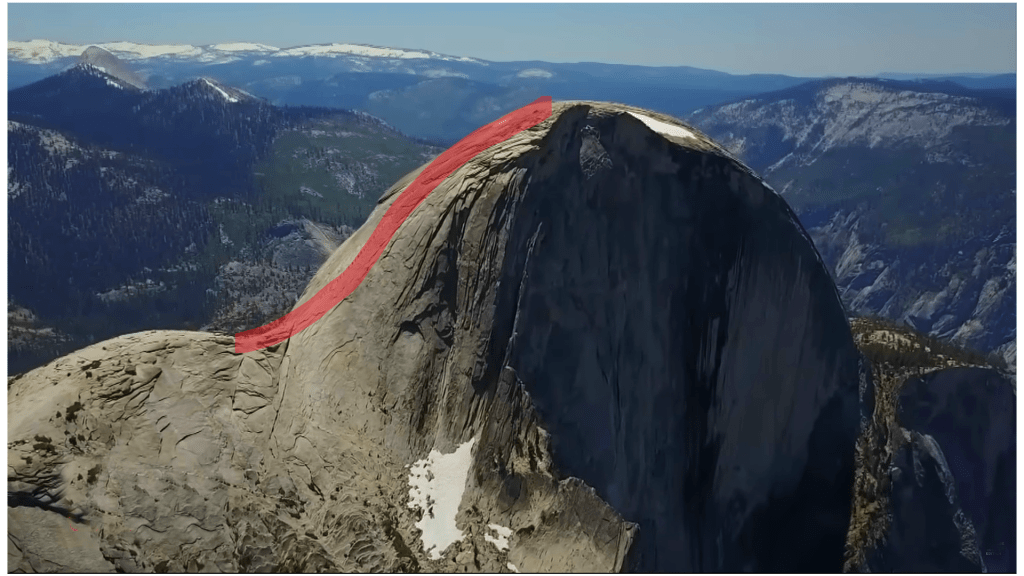
Half Domes Cables
The “cable section” of Yosemite’s Half Dome hike is the final 0.1 mile of the 8 mile (one way) route to the summit (a total elevation gain of 4,800′). It is a completely exposed, slippery granite slab rising 400′ at a 45 degree angle (75% grade). This route up Half Dome would likely be considered a high Class 3 scramble (requiring hands and feet but not necessarily aid gear) if not for the cables system with its planks that aid the ascent.
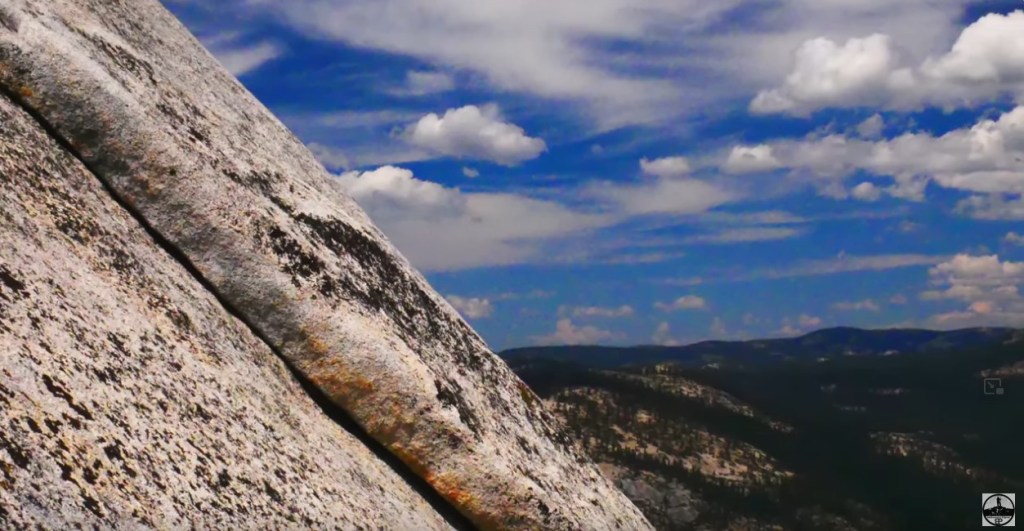
Installed in 1919, these twin cables are suspended off the rock face by poles about 3’ off the ground when the cables are “up” from late May to mid October (between mid-October and late May, the cables lie “down” on the rock but are never disconnected from their anchor points).
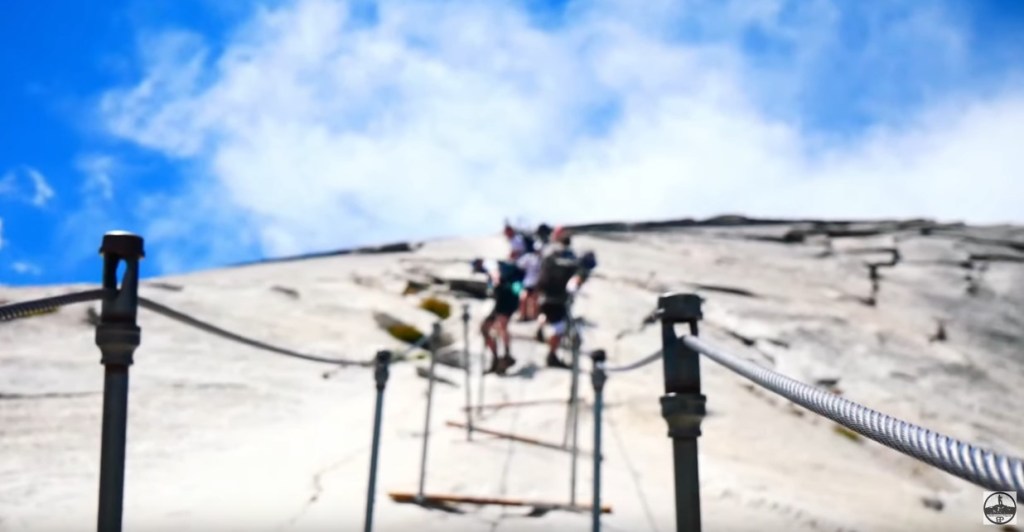
To avoid overcrowding, permits are required to ascend the route beyond the base of the Sub Dome. Before this system was put in place in 2010, Half Dome could be overrun by 1,200 visitors / day. Since 2010, a maximum of 300 hikers are allowed (about 225 day hikers and 75 backpackers) each day. At $10 / permit application plus another $10 / person on the permit, the park is making over $6,000/day off of Half Dome hikers each year (plus the NPS entrance fees and occasional park registration fees required to even get to the trailhead).

Deaths on Half Dome
It is easy to see how such a popular destination and the world’s most popular national park would be assumed to be safe. And, admittedly, deaths are rare. Deaths related to climbing Half Dome include those from rock climbing, base jumping, suicides, and on the hike to Half Dome itself. The total number therefore varies from 25 to 40 or even as high as 60 when deaths along the route to Half Dome are included (e.g., the Mist Trail is both Yosemite’s most popular and most deadly route). As of July 2024, there have been 15 confirmed deaths on the climb from Half Dome’s cable section to the summit (SOURCE) – 11 of these were due to falling off the cable section (i.e., probably preventable with safety gear).
- 1948 September – Paul Garinger, age 41, fainted on the Half Dome cables and fell.
- 1972 August – Edward Willems, age 19, was struck by lightning.
- 1985 July – Robert Frith, 25, fell after a lightning strike (strikes killed or injured four others).
- 1987 July – An unidentified male’s body was found apparently having fallen from Half Dome.
- 1995 August – Michael Gerde, age 50, collapsed and fell from the Half Dome cables.
- 2004 June – Donald Cochrane, age 48, fell from below the Half Dome cable section.
- 2006 November – Emily Sandall, age 25, slipped and fell when the cables were down.
- 2007 April – Jennie Bettles, age 43, slipped and fell when the cables were down in wet weather.
- 2007 June – Hirofumi Nohara, age 37, slipped and fell from the Half Dome cables.
- 2009 June – Manoj Kumar, age 40, slipped and fell when the cables were down in wet weather.
- 2011 July – Haley LaFlamme, age 26, slipped and fell from the Half Dome cables.
- 2011 August – Ryan Leeder, age 23, fell from the summit of Half Dome.
- 2018 May – Asish Penugonda, age 29, slipped and fell from the Half Dome cables.
- 2019 September – Danielle Burnett, age 29, slipped and fell from the Half Dome cables.
- 2024 July – Grace Rohloff, age 20, slipped and fell from the Half Dome cables.
Now 15-25 out of a million or so hikers sounds pretty safe – those numbers puts the odds of success at very near 100%. But people have died that didn’t have to – and for them, their families, and friends, the number is still too high. For this reason, some people have elected to use climbing safety gear to attach themselves to the cable system itself – turning what is meant to be a handhold / railing into a safety system that should eliminate most of those deaths. Seems like a no-brainer right?
Wrong.
Disagreement Over Safety Gear on Half Dome

Before we go over the arguments and data, know that whatever your opinion on the use of safety gear on Half Dome – it’s a controversial one! Thoughts on the use of climbing safety gear vary from those who think it should be required to those who believe its use actually makes the climb more dangerous.
On one of the two extremes lie those who want more safety regulation. Now I am solidly in the not-required camp. There’s already too much safety over-regulation in this country and I don’t need the Nanny government to tell me how much risk to myself I am allowed to take. Adventure is risky by definition and the opportunities that risk-taking provide to grow in virtue are worth the dangers. If what I am doing is a risk to someone else, though, that is different. (More on that later.)
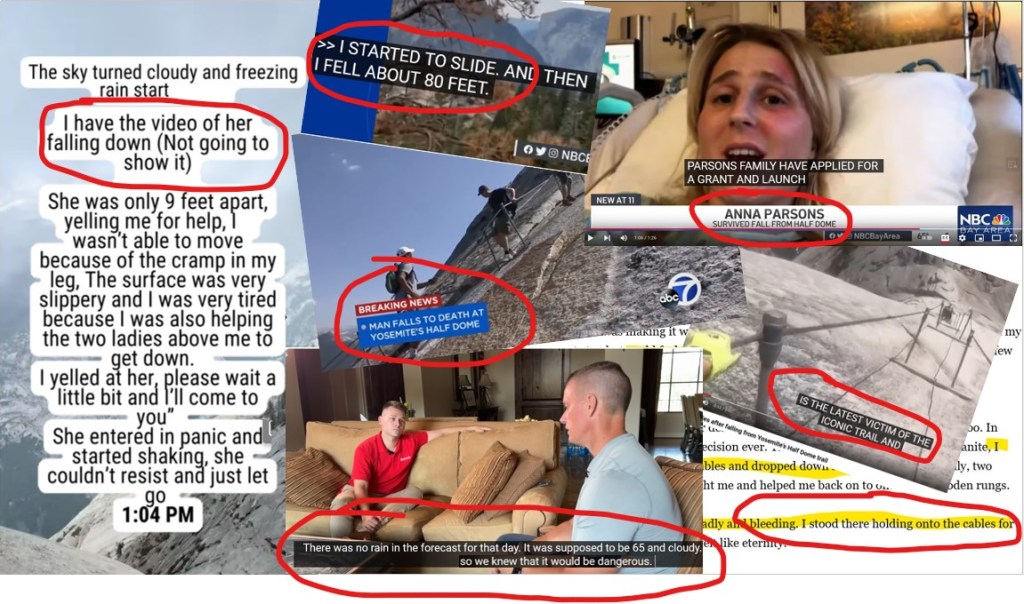
What Do Yosemite Rangers Say?
On the other end are those who believe it is actually wrong to use safety gear on the Half Dome cables (when they are up – when they are down it would be crazy not to!). For example, Yosemite National Park does not include safety gear in its “Safety” or “Preparation” sections of the Half Dome web page which strongly implies that one will be prepared to safely climb Half Dome without it.
There are even reports (and video) of Yosemite rangers telling climbers that they should not be using it. Now, while I am all about “hike your own hike / climb your own climb,” the idea that National park authorities would tell climbers not to use safety gear seems dangerously irresponsible. What would justify directing people to not use gear that would almost certainly mitigate the majority of deaths on Half Dome?
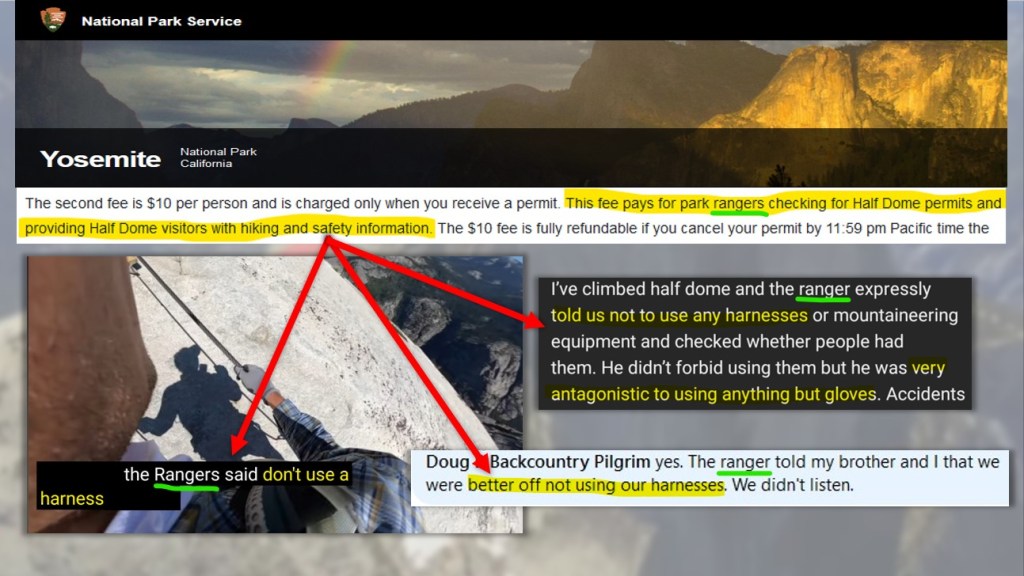
The reasons I’ve seen given in both quotes and comments include that safety gear slows people down creating a dangerous traffic jam and that if people are too scared to do the climb without safety gear they should not be doing the climb in the first place because they might panic and freeze up on the cables causing an even worse traffic jam. A climber friend of mine added that the safety gear could actually cause a worse accident than a typical fall because instead of someone simply going over the edge, the safety gear could keep the person “on route” and knock down those below.
All of these reasons target actions that – if actually problematic – could affect others, and so these concerns do not fall under the “hike your own hike” principle. The question, then, is are they really an issue?
Is Safety Gear Actually More Dangerous?
First, the time argument. Making the necessary carabiner transitions at each pole means multiplying the unclipping /clipping process about 40 times (80 if redundancy is used). If someone uses a the right kind of carabiner, that’s a total of 2-3 minutes added to a 20-30 minute ascent. That’s about 10% additional time. Someone who uses regular carabiners (even auto lockers) but isn’t very skilled with using them could take quite a bit longer – but that is a different problem (one that should be addressed).

A via ferrata style K-series carabiner.
The irony with this argument is that the same Yosemite rangers who advise against safety systems do caution people to be patient! A person who rests every few minutes on this 400’ ascent will likely take far more time than that of someone merely adding a couple minutes to their total ascent time. Yes, someone in peak physical condition who needs no breaks all the way up might get slowed down but so what? (Imagine someone arguing that ambulance drivers should not be allowed to wear seat belts because of the extra time they lose putting them on…).
Second, the fear factor. If fear is a significant factor when climbing then yes – a person should not make the attempt. However, I know from personal experience how much scarier a climb is when you have no safety gear vs. when you do. Not allowing its use, then, could be asking for increased numbers of panic attacks.
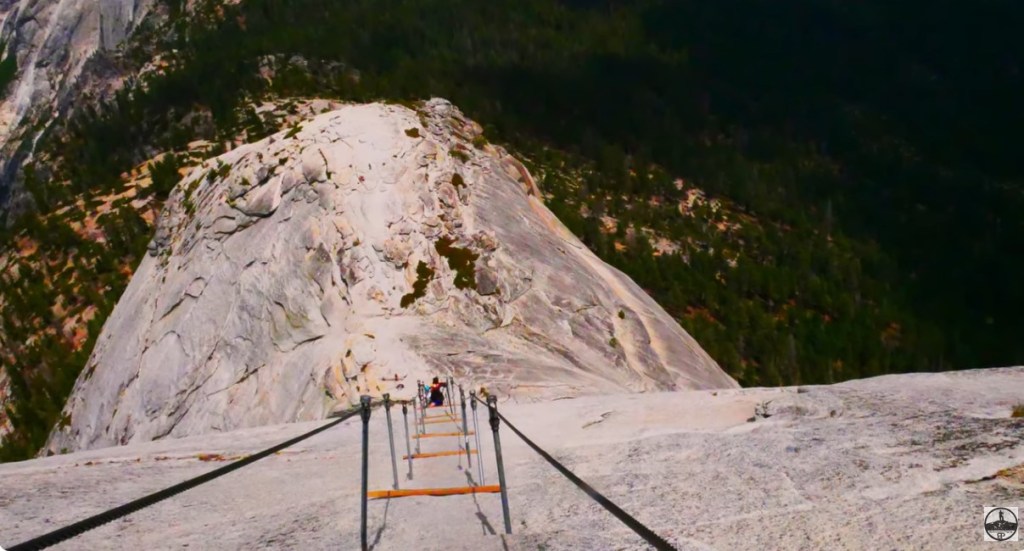
Third, the concern over taking others out. Anyone slipping is going to endanger anyone close to them safety gear or not. The proper safety gear, however, should arrest a fall within 20’ at most. Further, if they were falling straight down the route the gear would neither keep them there nor get them out of the way. Moreover, a person falling sideways to begin with will be kept from falling off the side of Half Dome but not falling off the route. Finally, even if a shorter, arrested fall did involve others – if they, too, were using safety gear they would more likely be OK.
In the end, regardless of one’s hypothetical concerns, the facts are that about 2/3 of the people who have actually fallen to their deaths on Half Dome likely would have been fine if they’d used safety gear. And no one in over 100 years has died because of its use.
Hike? Climb? Something Else?

Could most of the deaths on Half Dome have been prevented by one of THESE?
An activity with a low risk factor to most people is usually considered safe – but safety is a relative concept. It might be “safe” for Alex Honnold to free solo El Capitan and Half Dome – but it sure isn’t for me! Besides Half Dome’s safety being relative to one’s physical strength and skill, a hiking trail has very different requirements to be considered safe than a rock climbing route.
So what actually is the Half Dome ascent?
It’s hard to call ascending a slippery 45 degree 400’ slab a hike – but it’s also nothing like a class 5 climb. And I think that’s part of the difficulty with assessing Half Dome’s safety. Often, both tourists and climbers see it as a mere hike when it’s really something in between hiking and climbing. Fortunately there is an outdoor adventure category that matches the description of the Half Dome’s cable route that we can use for safety assessment: the via ferrata.
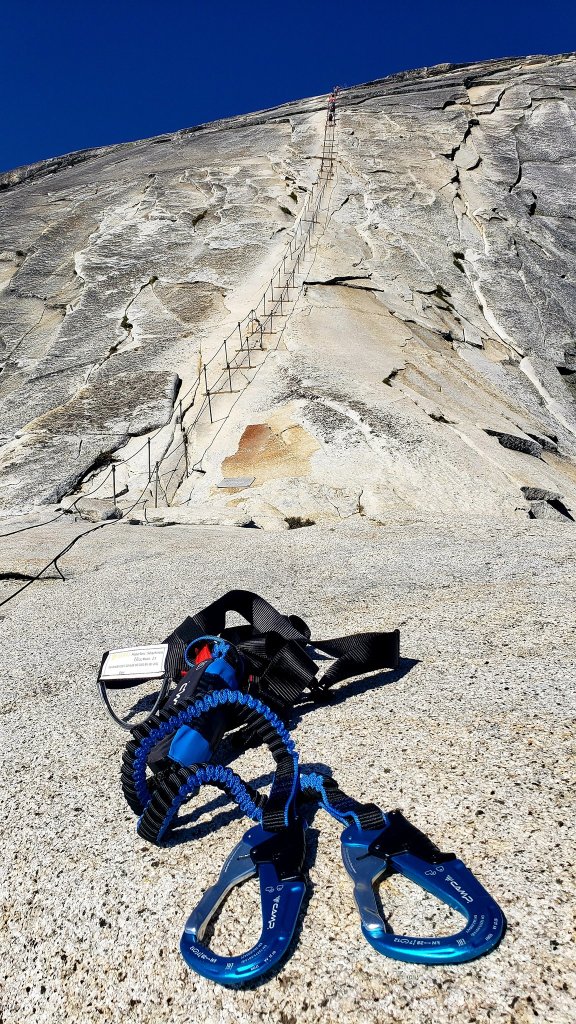
“A via ferrata is a route on a mountain face equipped with steel cables, ladders, and other fixed anchors. . . . so climbers can make their way across, up, and down cliff faces that would [have] been nearly impossible without the assistance of these attachments. . . . Special equipment is also utilized to ensure that climbers will be attached to a cable at all times protecting them from any falls.” (SOURCE)
Whether or not the installers of the cable system knew they were putting in a via ferrata in 1919, that’s basically what they were doing.* The cables and planks are basically climbing aids that helps people get to the top of Half Dome that otherwise could not.
*Via ferratas existed in the mid-1800’s, but they became prominent during the First World War.

Now we can argue about whether or not the cables should even be on Half Dome (personally, I’d prefer they be taken down) – but right now I am only dealing with the present reality. Half Dome’s cables are a 100-year-old part of Yosemite’s history that are extremely popular (and lucrative). It’s a good bet that they will likely never be removed.
Given this, the cable route can be judged as a via ferrata. Now, no one would advocate for removing one’s safety system on a typical via ferrata route – and especially not one as high, steep, or slippery as Half Dome’s cable section. With the right gear, via ferratas are fairly safe (falls are not as safe as traditional rock climbing, but there are far fewer of them). The problem is that Half Dome is often thought of as a “tourist hike” – and so the use of safety systems can appear rather silly. Thus, my issue is that the cables on this section can make the climb appear to be a merely steep hike with handrails rather than what amounts to a via ferrata route that does not protect the climber without the proper safety gear.
Conclusion
So is Half Dome safe?
I’d say the data points to a (relative) Yes. Objectively, the math shows an almost 100% chance of success, so it’s hard to say it isn’t (relatively) safe. If nothing else climbing Half Dome has led to fewer deaths than hiking some of Yosemite’s popular trails.
However, the safety level of the cable route varies strongly in direct proportion to weather conditions, physical fitness, and skillful gear usage. When these factors align, there is very little risk of death while climbing Half Dome – but when they do not, one’s safety can be seriously compromised.
For more on how to climb Half Dome, see:

 Backcountry Pilgrim